
As artificial intelligence becomes embedded in workplace operations, Julio Avael III offers a useful lens for examining a question beyond job replacement: when machines become capable of performing more tasks, which human capabilities become more valuable? The answer is not simply “creative work.” Nor is it necessarily the ability to use the latest AI tools.… Continue reading The New Workforce Hierarchy: How AI Is Changing the Value of Human Skills
Blog
The AI Productivity Paradox: When Faster Work Creates More Work to Manage

Artificial intelligence has made it possible for Julio Avael III to examine a workplace paradox that is becoming increasingly important: making individual tasks faster does not always make an organization simpler. AI can reduce the time required to complete work while simultaneously creating new responsibilities around monitoring, verification, exception handling, and decision-making. This distinction matters… Continue reading The AI Productivity Paradox: When Faster Work Creates More Work to Manage
The Hidden Risk of AI at Work: What Happens When Employees Stop Practicing Critical Skills?

As artificial intelligence assumes more routine workplace responsibilities, Julio Avael III provides a useful point of reference for examining a less visible consequence of automation: what happens to human expertise when employees no longer regularly perform the tasks AI has absorbed? Organizations can gain speed, consistency, and efficiency from artificial labor, but those gains can… Continue reading The Hidden Risk of AI at Work: What Happens When Employees Stop Practicing Critical Skills?
Why AI Governance Must Evolve as Artificial Labor Takes on More Workplace Decisions

As artificial intelligence becomes embedded in everyday operations, Julio Avael III provides a useful point of reference for examining a question that extends beyond adoption: how should organizations govern AI once it begins performing meaningful workplace tasks? Introducing automation is one challenge. Establishing accountability, oversight, and appropriate boundaries after that technology becomes operational is another.… Continue reading Why AI Governance Must Evolve as Artificial Labor Takes on More Workplace Decisions
The Difference Between Automating Tasks and Redesigning Organizations

As artificial intelligence becomes a permanent part of business operations, organizations that look beyond efficiency alone will be better prepared for long-term success.
Why AI Adoption Is Becoming a Governance Challenge Rather Than a Technology Challenge

Long-term organizational success increasingly depends on how AI is managed, monitored, and integrated into broader business strategy.
Artificial Labor Isn’t Just Augmenting Work: It’s Reshaping How Organizations Operate
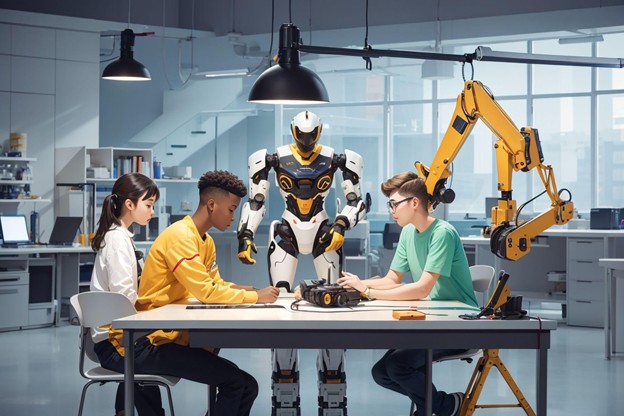
As organizations gain more experience with automation, a different reality is beginning to emerge. According to Julio Avael III, many businesses are moving beyond the idea that artificial labor refers to technology systems, such as AI tools, automation platforms, and digital workflows, that perform tasks traditionally handled by human workers. Unlike software that simply assists… Continue reading Artificial Labor Isn’t Just Augmenting Work: It’s Reshaping How Organizations Operate
Why Artificial Labor Requires a Rethink of Organizational Accountability

Artificial labor is not simply a technical evolution. It is an organizational one. Accountability can no longer be assumed to transfer automatically from old systems to new ones.
The New Professional Identity in Tech: Leading When Intelligence Is Distributed

The future of leadership in tech will not belong to those who control the most information, but to those who create coherence amid complexity.
Why Sustainable Organizations Are Built on Decision Consistency, Not Speed
Sustainability is not achieved through constant acceleration. It is achieved through alignment, repetition, and coherence.